
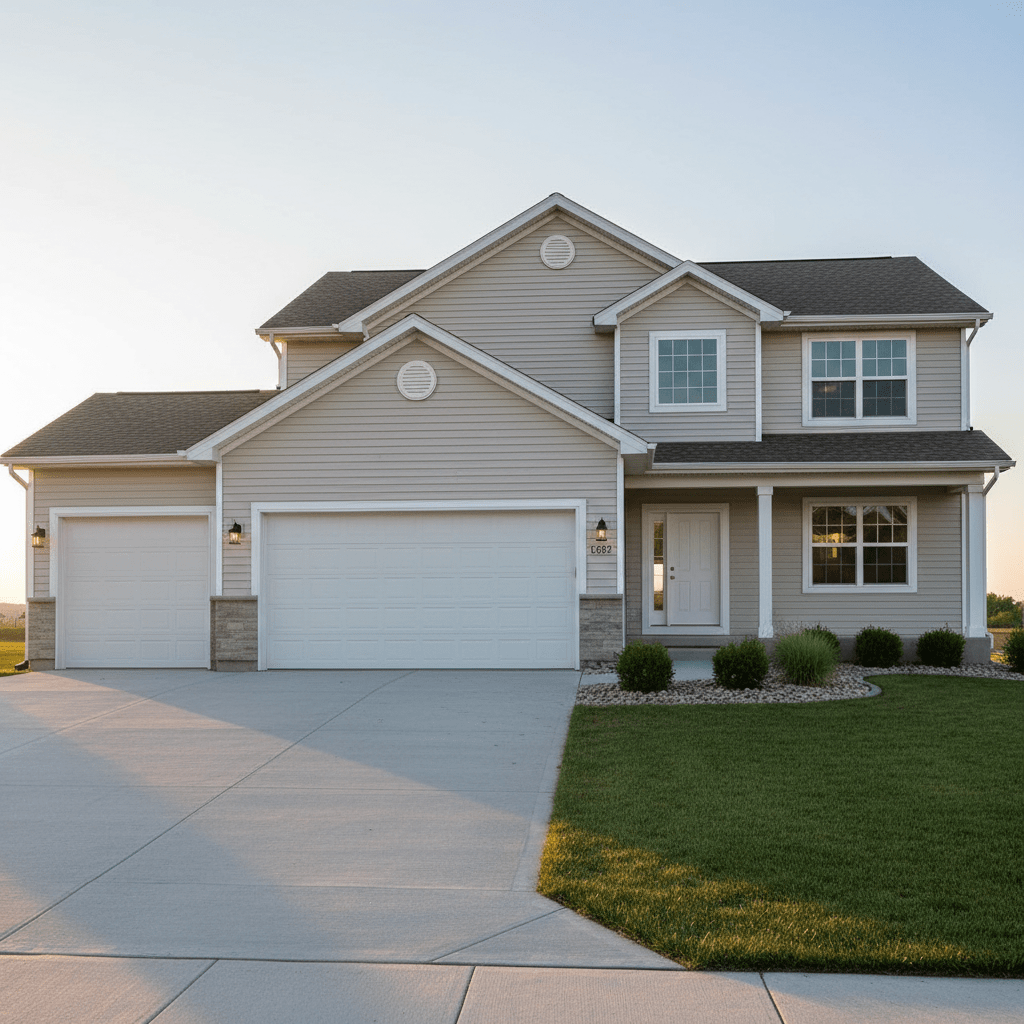
Yes, you can accept a contingent offer on your Sioux Falls home, and in today’s slower, higher-inventory market it is often worth considering — as long as you add a kick-out clause that lets you keep showing the home and take a stronger offer if one arrives.
Quick Answer: A contingent offer means the buyer’s purchase depends on selling their current home first. Accepting one is reasonable when your home is priced right and the buyer’s home is already listed or under contract — but always negotiate a kick-out clause. That clause keeps your Sioux Falls home on the market and lets you take a stronger, non-contingent offer if a better one comes in.
What a contingent offer actually means
A contingent offer is a real offer with strings attached. The most common version around Sioux Falls is a home sale contingency — the buyer agrees to buy your home, but only if they sell their current one first. If their home does not sell inside the agreed window, they can walk away and, in most cases, keep their earnest money.
That is the trade you are weighing: a committed buyer at a good price, in exchange for tying your sale to a home you do not control.
Why more Sioux Falls sellers are seeing contingent offers
The Sioux Falls market has cooled from its peak, and that shift is exactly why contingent offers are showing up more often. In the July 2026 report from the Realtor Association of the Sioux Empire, new listings rose 9.6% year over year (523 versus 477), giving buyers more choices than they had a year ago. At the same time, the median sales price held at $340,450 — up 1.6% year over year — and sellers still received 97.7% of their original list price on average.
With builders adding inventory along growth corridors like Veterans Parkway, Tea, and Harrisburg, buyers finally have room to move up. Many of those move-up buyers own a home they need to sell first — and that is what lands a contingent offer on your table.
When accepting a contingent offer makes sense
A contingent offer is worth taking seriously when most of these are true:
- The buyer’s home is already listed — ideally under contract. A buyer whose sale is pending is close to the finish line. A buyer who has not listed yet is a much bigger gamble.
- Their home is priced to sell and sits in a moving price band. Homes in the $200,000 to $400,000 range still move quickly in Sioux Falls, so a well-priced contingent home is likely to close.
- The offer price is strong. Because you are taking on risk, a contingent buyer should meet or beat what a clean offer would bring.
- Your home is priced right and shows well. If your home would sit anyway, a solid contingent offer beats an empty calendar.
If your home is priced to move and you would rather not carry it another two months, a strong contingent offer can be the smart play. If you are still deciding how aggressively to price in the first place, my guide on whether to price your Sioux Falls home to sell fast or hold for top dollar walks through the trade-offs.
How a kick-out clause protects you
The single most important term in any contingent offer is the kick-out clause. It lets you keep your home on the market and keep taking showings while the buyer works to sell theirs.
Here is how it works: if a second, stronger offer comes in — usually a non-contingent one — the first buyer gets a set window, typically 24 to 72 hours, to either remove their contingency and move forward or step aside so you can take the better offer. The home sale contingency period itself usually runs 30 to 60 days.
Without a kick-out clause, you are effectively off the market with no guarantee of closing. With one, you keep your options open and lose very little. I do not let a seller accept a contingent offer without one.
Keep backup offers alive
Even with a kick-out clause, keep your listing active and welcome backup offers. A backup offer in writing is the leverage that makes a kick-out clause actually work — it gives you somewhere to go the moment the first deal wobbles.
The risks to weigh before you say yes
Contingent offers carry real downside, and you should price it in:
- Chain failure. If the buyer’s home does not sell, your deal collapses and you restart — weeks later than if you had held out.
- Closing delays. Even when the buyer’s sale closes, it can run long, pushing your timeline and your move.
- Carrying costs. Every extra week is another mortgage payment, tax accrual, and utility bill. Those costs eat into your bottom line, and they belong in your net-proceeds math before you accept.
If certainty matters more than squeezing out the last dollar, it is worth comparing a contingent offer against a clean one — even a cash offer versus a traditional listing — so you are deciding on net proceeds and reliability, not just the headline price.
A note for the buyer’s side
If you are the one who needs to sell before you buy, a contingent offer is often your bridge — but it is not your only option. Bridge loans, a HELOC, and sale contingencies each solve the timing problem differently. My guide on buying before you sell in Sioux Falls breaks down which path fits which situation. Buyers just starting out can also grab my free Sioux Falls Buyers Guide to map the whole process first.
How this works in South Dakota
A few local details matter once you accept. In Sioux Falls, the title company — First Dakota Title is common — typically holds the earnest money and handles closing; South Dakota does not require an attorney. You still owe the buyer a completed Seller’s Property Condition Disclosure Statement under SDCL 43-4-44, contingent offer or not. And South Dakota’s real estate transfer fee of $0.50 per $500 of price — about $340 on a median home — is paid by the seller at closing, so it factors into your net either way.
Frequently Asked Questions
What is the difference between contingent and pending in Sioux Falls?
Contingent means your home is under an accepted offer that still has conditions to clear, such as the buyer selling their current home. Pending means those conditions are satisfied and the sale is moving to closing. A contingent home can often still take backup offers; a pending one usually cannot.
How long is a typical home sale contingency period?
Most home sale contingencies run 30 to 60 days. A kick-out clause typically gives the seller a 24 to 72 hour window to ask the buyer to remove the contingency if a stronger, non-contingent offer comes in.
Can I keep showing my house if I accept a contingent offer?
Yes, if your contract includes a kick-out clause. That clause lets you keep marketing the home and accept a backup offer. If a better offer arrives, the first buyer has a set window to remove their contingency or step aside.
Should I require the buyer’s home to already be under contract?
It is much safer. A buyer whose home is already listed and under contract is far closer to closing than one who has not listed yet. The further along the buyer’s sale, the lower your risk that the chain falls apart.
Who holds the earnest money in South Dakota?
In Sioux Falls, earnest money is typically held by the title company, such as First Dakota Title, not by an attorney. South Dakota does not require an attorney to close, and the title company manages the funds and the closing.
The bottom line
A contingent offer is not automatically a bad deal — it is a manageable risk when the buyer’s home is already moving, your price is right, and a kick-out clause keeps you in control. The right call depends on your timeline, your carrying costs, and how the specific buyer’s sale looks.
If you are weighing a contingent offer on your own home right now, I am happy to look at the terms with you and run the numbers before you sign anything. Reach out anytime.
Sources
- SiouxFalls.Business — New home listings show increase in Sioux Falls (Realtor Association of the Sioux Empire, July 2026 report)
- Redfin — Home Sale Contingency Explained
- HomeLight — How a Kick-Out Clause Works
- South Dakota Codified Law 43-4-44 — Seller’s Property Condition Disclosure
About Tyce Ortman
Tyce Ortman is a residential real estate agent with the Jeff Merrill Team at eXp Realty, serving Sioux Falls, South Dakota and surrounding communities including Brandon, Harrisburg, and Tea. He works with both buyers and sellers, guiding them from first search or listing all the way through closing. Call or text Tyce at (605) 413-7903.
 Tyce Ortman | eXp Realty
Leave a comment