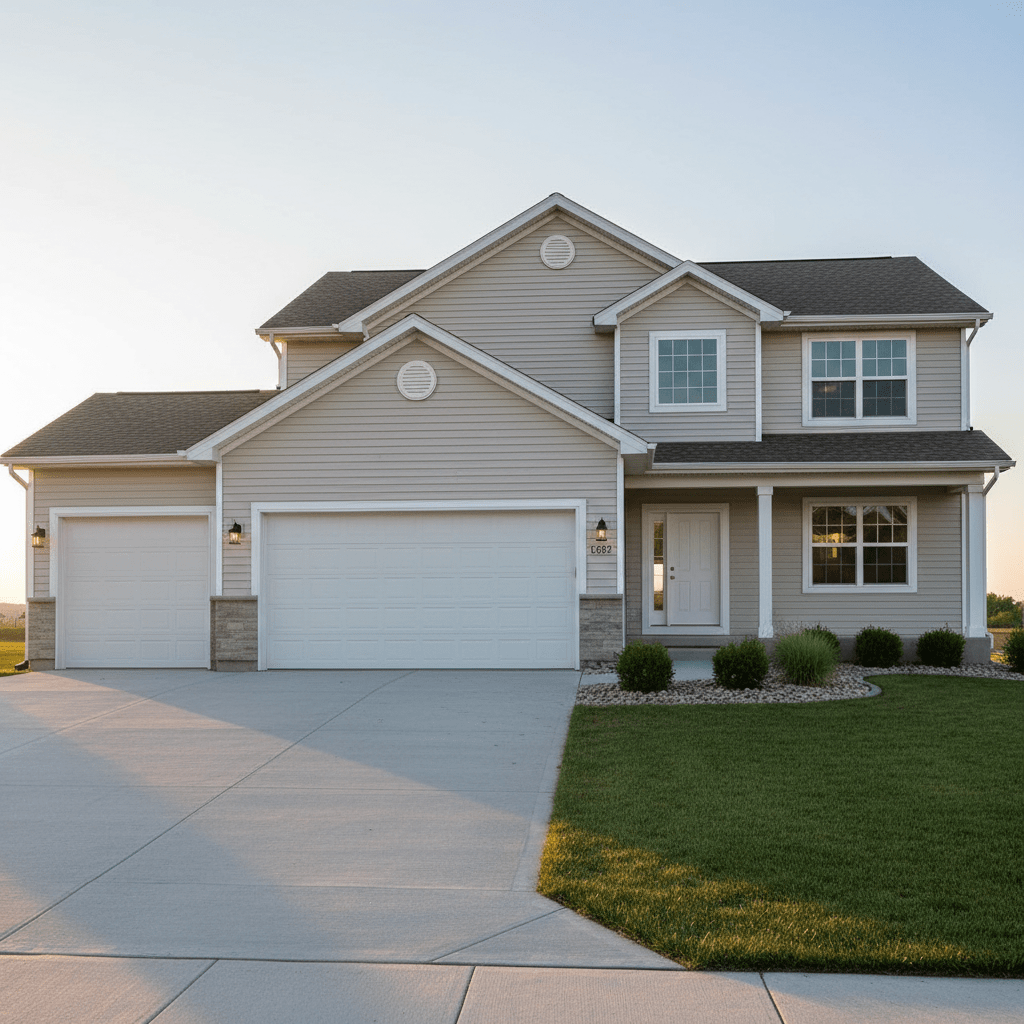
Renting is usually cheaper month-to-month in Sioux Falls right now, but buying builds equity you keep instead of rent you never see again. In 2026, the median rent sits around $1,129 a month while owning a median-priced $340,450 home runs closer to $2,200–$2,550 a month once you add taxes and insurance. Which one wins depends almost entirely on how long you plan to stay.
Quick Answer: In 2026, renting is cheaper month-to-month in Sioux Falls — the median rent is about $1,129, while owning a median $340,450 home costs roughly $2,200–$2,550 a month with taxes and insurance at today’s rates. But rent buys you nothing long-term, while a mortgage builds equity. If you’ll stay three or more years, buying usually comes out ahead.
By Tyce Ortman — August 22, 2026
How the rent-versus-own numbers compare in 2026
This is one of the most common questions buyers in the Sioux Falls area are searching right now, especially with rents climbing and builders adding new homes to choose from. So let’s put real, current numbers next to each other.
What renting costs today. As of August 2026, the median rent in Sioux Falls is about $1,129 a month, up roughly 6% year over year. A typical two-bedroom apartment runs near $1,127, and a rented single-family house averages closer to $1,695. Rent is predictable, requires only a deposit up front, and leaves repairs to the landlord.
What owning costs today. The median sale price in Sioux Falls was $340,450 as of the July 2026 report from the Realtor Association of the Sioux Empire. With the 30-year fixed mortgage rate averaging 6.65% the week of August 20, 2026, here’s a rough monthly estimate on that median home:
- 10% down (~$34,000): about $1,967 principal and interest, plus roughly $325 property tax, ~$110 insurance, and ~$130 mortgage insurance — around $2,530 a month.
- 20% down (~$68,000): about $1,748 principal and interest, plus taxes and insurance, and no mortgage insurance — around $2,185 a month.
These are estimates to illustrate the math, not a quote — your actual payment depends on your rate, down payment, credit, and the exact property. Property tax also varies between Minnehaha and Lincoln County, which is worth checking before you settle on a neighborhood.
On paper, renting clearly wins the monthly comparison. But that’s only half the picture, because a chunk of every mortgage payment goes toward principal — money you keep — while every rent dollar is gone for good.
When renting makes more sense
Renting is often the smarter call when:
- You’re not staying long. If there’s a real chance you’ll move within two to three years, the cost of buying and reselling — closing costs, moving, agent fees — can outrun the equity you’d build.
- Your cash is tight. Buying takes a down payment plus closing costs. If that would drain your savings, renting while you build reserves is the responsible move. Here’s how much cash you actually need to buy in Sioux Falls.
- Your income or job is in flux. Flexibility has real value. A lease lets you relocate for the right opportunity without selling a house first.
When buying wins in Sioux Falls
Buying tends to pull ahead when you plan to stay put and can cover the upfront cost. A few reasons it works well here:
- You build equity instead of paying a landlord. On the median home, a good portion of your early payments goes to interest, but principal, appreciation, and any rent increases you dodge all compound in your favor over time.
- Your payment is stable. A fixed mortgage locks your principal and interest for 30 years. Sioux Falls rents, by contrast, rose about 6% in the past year.
- South Dakota keeps closing costs low. There’s no state income tax, and the real estate transfer fee is just $0.50 per $500 of price — about $340 on a median home, paid by the seller. Buyers here don’t face the heavy transfer taxes common in other states.
- First-time buyers have help. Down-payment and rate assistance can shrink the cash you need up front. Start with these first-time home buyer programs in Sioux Falls.
A simple rule of thumb: if you’ll stay three or more years, owning usually beats renting once equity and stable payments are factored in. Under that, renting often wins. If you want to pressure-test that against your own budget, my post on the income you need to buy a house in Sioux Falls is a good next step.
How the 2026 market shifts the math
The Sioux Falls market has cooled from its peak seller’s market, and that’s good news if you’re weighing a purchase. Builders are adding inventory across growth corridors like Veterans Parkway, Tea, Harrisburg, and northwest Sioux Falls, which means more choices and more room to negotiate than buyers had a couple of years ago. If you’re comparing brand-new versus existing homes, my guide on new construction versus resale in Sioux Falls breaks down the trade-offs.
One local wrinkle to plan around: heavy road construction on corridors like Veterans Parkway, 20th Street near Avera, and 26th Street runs through much of the fall, with some neighborhood closures into October. It doesn’t change the rent-versus-buy math, but it’s worth factoring into commute and access when you tour homes.
The honest answer is that your number is personal. It depends on how long you’ll stay, how much you can put down, your rate, and the specific home. That’s exactly the kind of calculation I walk buyers through before they ever start touring — running your real payment against comparable rents so the decision is based on your situation, not a national headline.
Frequently Asked Questions
Is it cheaper to rent or buy in Sioux Falls in 2026?
Month-to-month, renting is cheaper — the median rent is about $1,129 versus roughly $2,200–$2,550 to own a median $340,450 home with taxes and insurance. But renting builds no equity. If you stay three or more years, buying usually comes out ahead once principal and appreciation are counted.
How much do I need to make to buy a median home in Sioux Falls?
For a $340,450 home at today’s rates, most lenders want to see household income in roughly the $85,000–$100,000 range, depending on your debts and down payment. The exact figure shifts with your credit and loan type, so it’s worth running your own numbers with a local lender.
How long do I need to stay in a home for buying to pay off?
Around three years is a common break-even point in Sioux Falls. That’s usually long enough for equity and appreciation to offset the closing costs of buying and eventually selling. If you might move sooner, renting is often the safer financial choice.
Are Sioux Falls home prices still rising in 2026?
Yes, but more gently. The median sale price was up about 1.6% year over year as of the July 2026 report, while new listings rose nearly 10%. More inventory has slowed price growth and given buyers more leverage than during the peak seller’s market.
The bottom line
Renting wins the monthly math in Sioux Falls today, but buying wins the long game if you’ll stay put and can handle the upfront cost — and a cooler, better-stocked 2026 market has tilted things toward buyers. The right answer is the one that fits your timeline and budget, not a rule of thumb.
If you’re weighing this for your own situation, grab my free Sioux Falls Buyers Guide to see the full path from first search to closing. And if you’d like to run your real numbers against comparable rents, I’m happy to walk you through it — reach out anytime.
Sources
- Realtor Association of the Sioux Empire — July 2026 market report, via SiouxFalls.Business and rase-inc.org
- Freddie Mac — Primary Mortgage Market Survey, week of August 20, 2026
- Zumper — Sioux Falls average rent, August 2026
- South Dakota Housing (SDHDA) — first-time buyer and down-payment programs
About Tyce Ortman
Tyce Ortman is a residential real estate agent with the Jeff Merrill Team at eXp Realty, serving Sioux Falls, South Dakota and surrounding communities including Brandon, Harrisburg, and Tea. He works with both buyers and sellers, guiding them from first search or listing all the way through closing.
 Tyce Ortman | eXp Realty
Leave a comment