
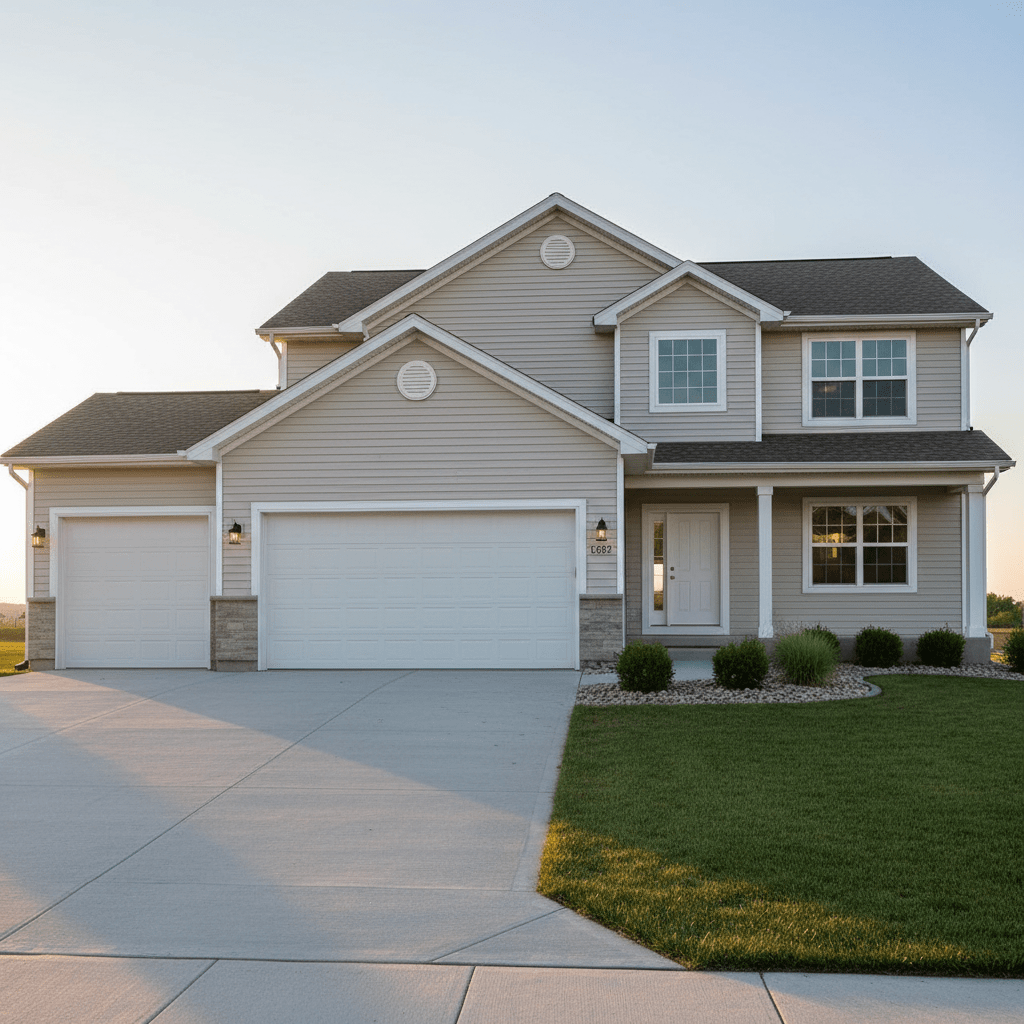
Sioux Falls is growing outward, and the clearest direction is the ring the city is building along Veterans Parkway and the future SD-100 corridor — pushing new homes toward the southeast near Tea and Harrisburg, and out to the northwest. If you’re trying to buy where the city is heading rather than where it has already been, the land opening up along this outer loop is where most of the new construction is landing in 2026.
Quick Answer: Sioux Falls is expanding along its outer edge, following Veterans Parkway and the planned 17-mile SD-100 corridor that will one day loop from the Tea interchange on I-29 around to I-90. The fastest-growing areas are the southeast toward Tea and Harrisburg, plus the northwest, where builders are adding lots, townhomes, and single-family homes as the road network catches up to demand.
By Tyce Ortman · September 7, 2026
Sioux Falls has been one of the faster-growing cities in the region, and the numbers back it up. The city’s population reached an estimated 224,676 in 2025, and the city’s long-range Shape Sioux Falls 2050 plan projects the city climbing toward roughly 250,000 by 2030. Growth like that has to go somewhere — and in Sioux Falls, it’s going to the edges.
That matters whether you’re buying or selling. Buy in the path of growth and you get newer homes, modern layouts, and infrastructure that’s still being built out. Buy well inside the established core and you trade some of that newness for shorter commutes and mature, tree-lined streets. Neither is wrong — but knowing which direction the city is expanding helps you make the call on purpose instead of by accident.
Which parts of Sioux Falls are expanding fastest?
Three directions stand out right now, and all three are tied to the road network.
- The southeast, toward Tea and Harrisburg. This is where a lot of new subdivisions and lots are opening up. It sits closest to the future SD-100 corridor’s southern anchor at the Tea interchange, and it’s drawn steady builder activity as families look for newer homes with a bit more space.
- The northwest. The other major push has been on the northwest side, where platted land and new development have concentrated as the city expands past its older boundaries.
- The Veterans Parkway ring itself. Wherever the parkway opens a new segment, development tends to follow. Land that used to sit just outside easy reach becomes a quick drive to I-29 or I-90 once the road connects.
The building activity is real, not just talk. Sioux Falls topped $1 billion in construction valuation for the fourth year in a row, and the city approved well over a hundred new subdivision plats in its most recent development year — the raw material for the neighborhoods going up along these corridors. For buyers, that’s the good news of this market: builders adding inventory means more options than you had at the peak of the seller’s market.
What Veterans Parkway and SD-100 actually are
If you’re new to the area, the two names get used loosely, so here’s the plain version.
SD-100 is the long-term vision: a planned 17-mile limited-access highway that will loop around the outer edge of the city, beginning at Exit 73 (the Tea interchange) on I-29 and running east and north to meet I-90. The South Dakota Department of Transportation describes it as sitting at the outer edge of the City of Sioux Falls 2025 Growth Plan, crossing both Minnehaha and Lincoln County. Think of it as the future ring road the city is growing into.
Veterans Parkway is the piece being built now. North Veterans Parkway opened to traffic in 2020, and the South Veterans Parkway project is filling in the rest. According to the project’s official construction page, the first segment from Western Avenue to Cliff Avenue opened in November 2024, the segment from Cliff Avenue to Sycamore Avenue is under construction through 2026, and the remaining segments are scheduled through 2029. The corridor is anticipated to be significantly complete in 2028.
Here’s why that timeline matters to a homebuyer: an area near a segment that’s already open gives you the access today. An area near a segment that opens in 2027 or later may offer lower prices now, with the payoff — and the day-to-day convenience — arriving once the road connects. If you’re weighing a home right in an active work zone, it’s worth reading up on what it’s like to buy near Sioux Falls road construction before you commit.
What growth-corridor location means for price, taxes, and timing
The Sioux Falls market has stayed steady rather than spiking. The median sales price across the area was $340,450 as of the July 2026 Realtor Association of the Sioux Empire report, up about 1.6% year over year, with new listings up nearly 10% from a year earlier. More listings and modest price growth is exactly the backdrop that gives corridor buyers room to negotiate — especially on new construction, where builders would rather offer incentives than sit on finished inventory.
A few things to keep in mind when you’re comparing homes along the growth ring:
- Which county you’re in changes your tax bill. The SD-100 corridor and the southeast growth area straddle both Minnehaha and Lincoln County, and the two counties don’t carry identical rates. Before you fall for a specific lot, check how the numbers compare — I break this down in Sioux Falls property taxes: Minnehaha vs. Lincoln County.
- New construction and resale price differently. A new build in a growth corridor often lists higher than a comparable older home closer in, but it comes with fewer near-term repairs and current finishes. If you’re torn, compare the trade-offs in new construction vs. resale in Sioux Falls.
- Closing here is straightforward. South Dakota closings run through a title company rather than an attorney, earnest money is typically held by that title company, and the state’s real estate transfer fee is low — $0.50 per $500 of price, roughly $335 on a median home, paid by the seller. Total closing costs here stay modest compared with many states.
If you’re choosing between the suburbs anchoring this growth — Tea, Harrisburg, and Brandon — that decision deserves its own look. My guide to Brandon vs. Harrisburg vs. Tea walks through commute, price, and inventory differences without the guesswork.
Should you buy in the path of growth?
Buying along a growth corridor is a real strategy, but it comes with honest trade-offs, and I’d rather you go in clear-eyed.
On the upside: you get the newest homes, the most inventory, and the chance to settle in before an area fully builds out. As roads connect and amenities follow, convenience improves over time. On the other side: living near active construction means detours and noise for a while, some amenities won’t arrive until the rooftops do, and no one can promise you exactly how any single street will appreciate. Anyone who guarantees a future number is guessing.
The right answer depends on your timeline. If you plan to stay put for years, being early in a corridor can work in your favor. If you might move again soon, an established area with proven access may fit better. This is exactly the kind of thing I walk buyers through before we ever tour a home — matching where the city is heading to how long you actually plan to live there.
Frequently Asked Questions
Where is most new construction happening in Sioux Falls right now?
The heaviest new-construction activity in 2026 is on the southeast side toward Tea and Harrisburg and on the northwest side, following where the city has platted land and extended roads. Both areas sit near the growing Veterans Parkway and future SD-100 corridor.
When will Veterans Parkway and SD-100 be finished?
South Veterans Parkway is anticipated to be significantly complete in 2028, with remaining segments scheduled through 2029, per the project’s official construction page. The full SD-100 loop around the city is a longer-term corridor-preservation effort by the SDDOT and the City of Sioux Falls, built out over many years.
Is it a good idea to buy near road construction?
It can be, if the price reflects the temporary disruption and the finished road will improve your access. The key is knowing your segment’s timeline so you know how long you’ll live with the work. Weigh the near-term noise and detours against the long-term convenience.
Do homes in the growth corridors cost more?
New-construction homes in growth corridors often list above comparable older homes closer to the core, but with more inventory coming online, builders are more willing to negotiate on price and incentives than during the peak seller’s market. Your county also affects the tax portion of your monthly payment.
Which county are the southeast growth areas in?
The southeast growth areas and the SD-100 corridor cross both Minnehaha and Lincoln County. Because the two counties carry different rates, it’s worth confirming which county a specific lot sits in before you compare total monthly costs.
The bottom line
Sioux Falls is growing along its outer ring — southeast toward Tea and Harrisburg, out to the northwest, and wherever Veterans Parkway and the future SD-100 corridor open new access. If you buy with that map in mind, you can pick a home that fits both your budget today and the direction the city is heading.
If you’re weighing a specific area or a new-construction lot, I’m happy to walk you through the numbers, the county lines, and the road timelines so you can decide with confidence. You can also grab my free Sioux Falls Buyers Guide to get started, and reach out anytime — no pressure.
Sources
- SDDOT — SD 100 Corridor Preservation Project
- South Veterans Parkway — Construction Details (City of Sioux Falls / SDDOT)
- Realtor Association of the Sioux Empire — Monthly Indicators (July 2026)
- KELOLAND News — Sioux Falls population grows to 224,676
- City of Sioux Falls — Shape Sioux Falls 2050 Comprehensive Plan (Draft, Feb 2026)
- SiouxFalls.Business — $1B+ building year
About Tyce Ortman
Tyce Ortman is a residential real estate agent with the Jeff Merrill Team at eXp Realty, serving Sioux Falls, South Dakota and surrounding communities including Brandon, Harrisburg, and Tea. He works with both buyers and sellers, guiding them from first search or listing all the way through closing. Call or text 605-413-7903.
 Tyce Ortman | eXp Realty
Leave a comment