
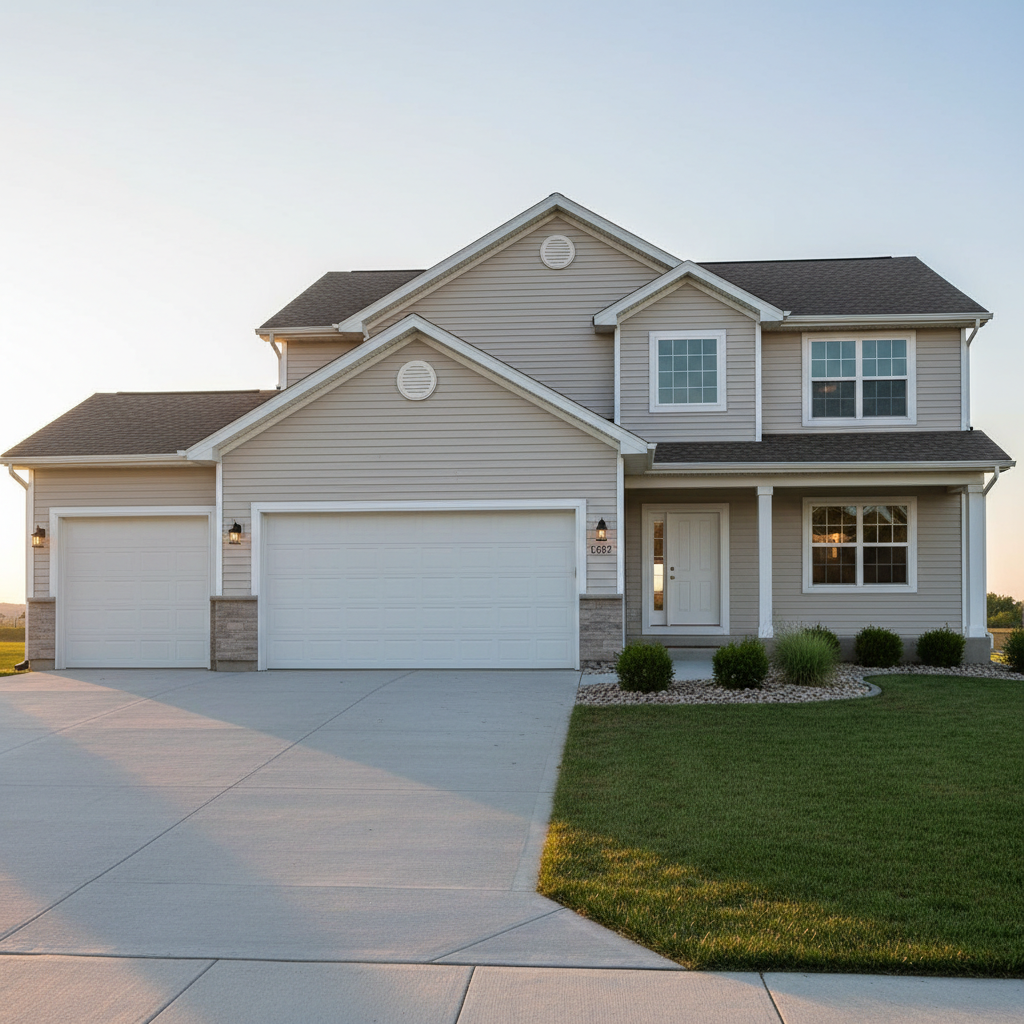
An escalation clause tells the seller you’ll automatically outbid competing offers, up to a dollar limit you set. In Sioux Falls right now, most buyers don’t need one — today’s market rarely produces the bidding wars that make an escalation clause worth the risk.
Quick Answer: In most of today’s Sioux Falls market, you probably don’t need an escalation clause. It’s an add-on that automatically raises your offer in set increments, up to a cap, to beat competing bids — so it only helps when a home draws multiple offers. As of the October 2026 Realtor Association of the Sioux Empire report, homes are averaging 83 days on market and selling at 96.8% of list price, so true bidding wars are uncommon right now.
What an escalation clause actually does
An escalation clause is a short addendum to your purchase offer. It says: I’ll pay a set amount above any verified competing offer, in fixed increments, up to a maximum price I’m willing to pay.
Here’s how it works with real Sioux Falls numbers. Say a home is listed at $310,000 — right around the current median. You offer $310,000 with a $2,000 escalation increment and a $325,000 cap. If another buyer comes in at $314,000, your offer automatically climbs to $316,000. If nobody else bids, you still pay your original $310,000. Your offer only escalates when the seller can show a bona fide competing offer, usually a copy of the rival contract.
The appeal is obvious: you win the home without overpaying by thousands “just in case,” and you don’t have to guess how high to go. The catch is just as real, and we’ll get to it — because in the current Sioux Falls market, the clause solves a problem most buyers don’t actually have.
Does the Sioux Falls market still call for one?
For most homes, no. The frenzied 2021-style bidding wars have cooled. According to the Realtor Association of the Sioux Empire’s October 2026 report (covered by SiouxFalls.Business on November 5, 2026), the Sioux Falls median sale price was $310,000 — down 4.6% year over year — with 203 closed sales, down 26% from a year earlier. Homes averaged 83 days on market, and sellers received 96.8% of their original list price.
Read those last two numbers again. When the typical home takes almost three months to sell and closes below asking, buyers aren’t fighting each other to the finish line. You usually have time to tour a home twice, sleep on it, and write a measured offer. That’s the opposite of the environment an escalation clause is built for.
Builders are adding to the picture, too. New construction along the Veterans Parkway corridor, in Tea and Harrisburg, and across southeast and northwest Sioux Falls has given buyers more options than they had at the peak of the seller’s market. More inventory means less pressure to escalate. If you’re still sizing up which side of the table has the advantage, it’s worth reading whether Sioux Falls is a buyer’s or seller’s market in 2026 before you decide how aggressive your offer needs to be.
When an escalation clause can still make sense here
“Most buyers” isn’t “all buyers.” There are still corners of the Sioux Falls market where multiple offers happen, and that’s where the clause earns its keep:
- Hot entry-level price bands. Move-in-ready homes in the roughly $150,000 to $250,000 range still sell fastest — the $150,000 to $200,000 band was the quickest in the October report at about 82 days. Well-priced starter homes in that range can draw more than one offer.
- A rare or updated listing. A fully remodeled home, a property on a sought-after lot, or a floor plan that almost never comes up for sale can still spark competition.
- New-construction lot releases. When a builder opens a limited release of lots or spec homes in a popular subdivision, the best ones can go quickly.
- A relocation timeline. If you’re moving to Sioux Falls on a tight window and can’t afford to lose a home and restart, an escalation clause can keep you in the running without a risky overbid.
Even then, go in with your eyes open. An escalation clause has three real downsides you should weigh with your agent.
It shows your ceiling
Your cap tells the seller the absolute most you’ll pay. A sharp listing agent may use that to push you to your max, or counter every offer to “highest and best” instead of honoring the escalation. You give up a little negotiating leverage the moment you reveal your top number.
The appraisal still has to support the price
If your offer escalates to $325,000 but the home appraises at $315,000, your lender will only finance against the lower number — and you’d need to cover the $10,000 gap in cash or renegotiate. That’s why an escalation clause and your appraisal strategy go hand in hand. Before you agree to climb above list, understand whether you should waive the appraisal contingency in Sioux Falls and what it would cost you if the number comes in low.
Not every seller will accept one
Some listing agents won’t work with escalation clauses at all — they find them hard to verify or simply prefer to call for highest-and-best offers. If the seller won’t accept the clause, you’re back to naming a single firm number anyway.
Smarter ways to win a Sioux Falls home right now
In a market where most homes aren’t drawing a crowd, the offer that wins usually isn’t the one with the fanciest price mechanics — it’s the one that’s clean, credible, and easy for the seller to say yes to. Focus here first:
- Lead with a strong pre-approval. A full underwritten pre-approval from a local lender tells the seller your financing won’t fall apart. It carries more weight than a few extra dollars.
- Keep your terms clean. A reasonable closing timeline, solid earnest money, and a short, sensible contingency list reassure a seller more than a high number with strings attached. In South Dakota your earnest money is typically held by the title company, such as First Dakota Title, so it signals you’re serious without going to the seller directly.
- Offer flexibility on possession. If the seller needs a few extra days after closing, a short rent-back can make your offer the easy choice.
- Price it right, then negotiate. With homes closing at about 96.8% of list, there’s often room to negotiate rather than overbid. Knowing how much you can negotiate on a house in Sioux Falls matters far more than an escalation clause in this market.
And be careful about stripping protections just to look aggressive. Waiving contingencies can win a deal, but it shifts real risk onto you — here’s an honest look at whether you should waive the inspection to win a Sioux Falls offer before you give anything up.
Whether an escalation clause belongs in your offer comes down to the specific home, the number of competing buyers, and your own cap and comfort level — and that changes block by block and week by week. This is exactly the kind of call I walk buyers through before we write an offer, so you’re never guessing whether you’re leaving money on the table or paying more than you had to.
Frequently Asked Questions
What is an escalation clause in simple terms?
It’s an addendum to your home offer that automatically raises your price above competing bids, in set increments, up to a maximum you choose. It only kicks in if the seller has a genuine competing offer to show, and you never pay more than your stated cap.
Do sellers have to accept an escalation clause in South Dakota?
No. A seller or their listing agent can reject an escalation clause and ask for your highest-and-best single offer instead. Some agents avoid them because they can be hard to verify, so your agent should confirm the listing side will honor one before you rely on it.
What happens if the home doesn’t appraise for the escalated price?
Your lender finances against the appraised value, not your offer price. If your offer escalates above the appraisal, you’d need to cover the difference in cash or renegotiate with the seller, unless you kept an appraisal contingency. Plan your appraisal strategy before you set your cap.
Is now a competitive time to buy in Sioux Falls?
Less than it was a few years ago. As of the October 2026 report, sales were down 26% year over year, homes averaged 83 days on market, and sellers accepted about 96.8% of list price. Most buyers have time to make a careful offer rather than a rushed, escalated one — though well-priced entry-level homes can still move fast.
The bottom line
An escalation clause is a tool for winning bidding wars — and in today’s Sioux Falls market, most homes aren’t in one. For the majority of buyers, a strong pre-approval, clean terms, and smart negotiation will do more than an automatic bid-raiser ever could. Save the escalation clause for the rare hot listing where you truly can’t afford to lose.
If you’re weighing an offer on a specific Sioux Falls home and want to know whether an escalation clause makes sense for your situation, I’m happy to walk through the numbers with you — no pressure. You can also grab my free Sioux Falls Buyers Guide to get the whole offer-to-closing process in plain language before you write that offer.
Sources
- Realtor Association of the Sioux Empire, October 2026 market statistics, reported by SiouxFalls.Business (Nov. 5, 2026) — median sale price $310,000, 203 closed sales, 83 days on market, 96.8% of list price received.
- Realtor Association of the Sioux Empire — Market Data & News.
- Redfin — What Is an Escalation Clause? How It Works and When to Use One.
About Tyce Ortman
Tyce Ortman is a residential real estate agent with the Jeff Merrill Team at eXp Realty, serving Sioux Falls, South Dakota and surrounding communities including Brandon, Harrisburg, and Tea. He works with both buyers and sellers, guiding them from first search or listing all the way through closing. Reach Tyce at (605) 413-7903 or through thesiouxfallsguide.com.
Leave a Reply